Filling needle manufacturing company
Discover expert filling needle manufacturing in Ahmedabad, Gujarat. We provide high-precision solutions for pharmaceutical and packaging industries.
Why This Matters in Ahmedabad, Gujarat
Ahmedabad, Gujarat, stands as a prominent center for pharmaceutical manufacturing, chemical processing, and packaging industries within India. This concentration of industrial activity creates a continuous demand for specialized machinery spares and precision components, including filling needles. Local manufacturers who adhere to global quality standards play a crucial role in supporting the region's production capabilities, enabling companies to source critical parts efficiently and maintain uninterrupted operations. The ability to collaborate with local experts also facilitates rapid prototyping and customization for evolving production needs.
What Is a Filling Needle — Overview
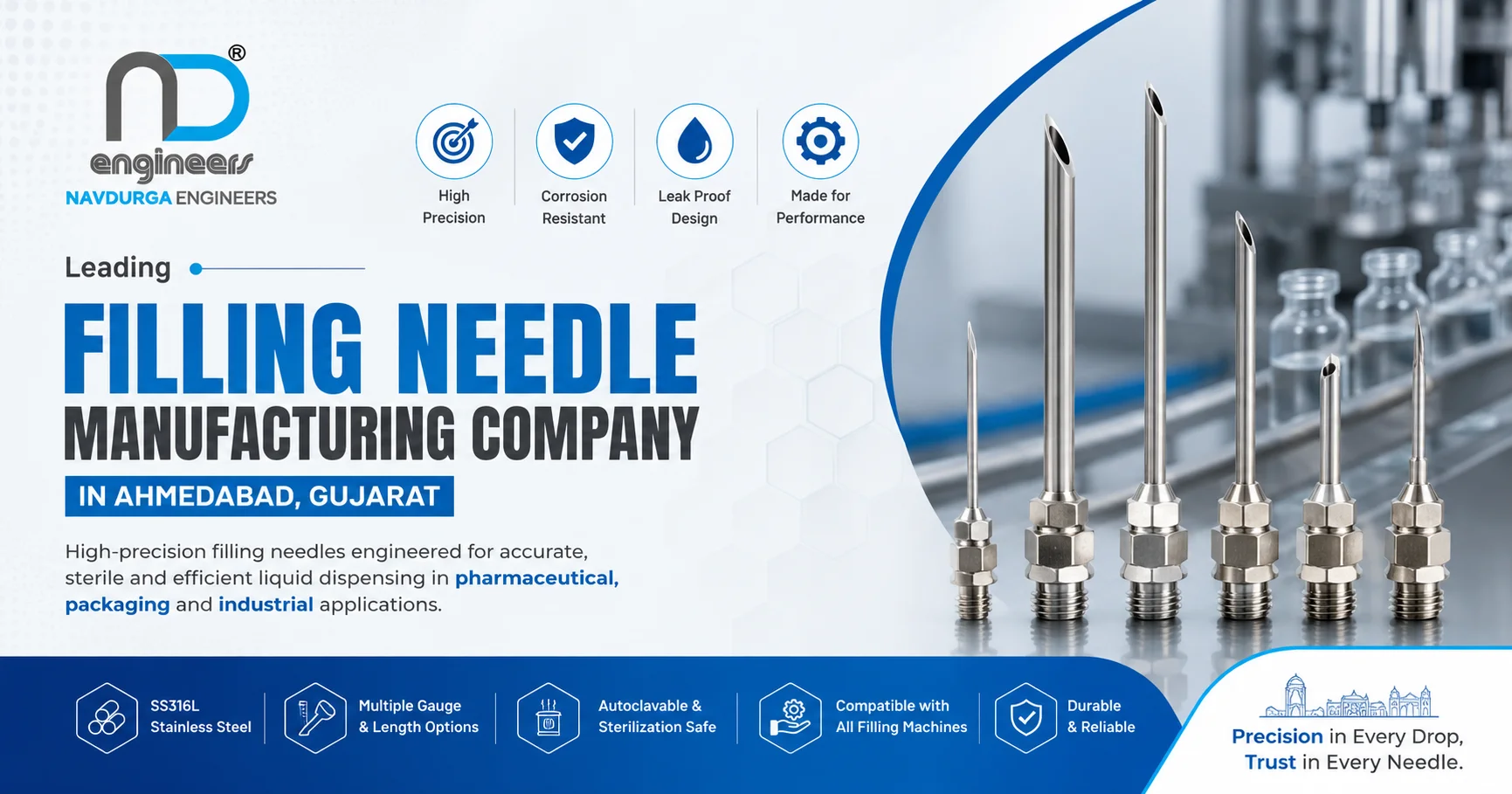
A filling needle is a precisely engineered component used in automated and semi-automated filling machines to dispense liquids, gels, and semi-solids into containers such as vials, ampoules, bottles, and syringes. Its primary function is to ensure accurate volumetric dosing, minimize product waste, and prevent contamination during the filling process. These needles are typically constructed from medical-grade stainless steel, often SS316L, due to its inertness, corrosion resistance, and suitability for sterilization. Different tip designs and gauges are employed to accommodate various product viscosities and container types, optimizing flow and preventing issues like dripping or foaming.
Key Features and Technical Specifications
- Material Construction: Manufactured from pharmaceutical-grade SS316L stainless steel for superior corrosion resistance and inertness.
- Precision Machining: Features consistent internal bore diameter and smooth surface finish (low Ra value) to ensure accurate flow and minimize product retention.
- Tip Configurations: Available with various tip designs, including blunt, bevel, side-port, and anti-drip, optimized for different liquid viscosities and container openings.
- Gauge and Length Options: Offered in a wide range of gauges (e.g., 14G to 27G) and custom lengths to suit diverse filling applications and machine specifications.
- Sterilization Compatibility: Designed to withstand repeated sterilization cycles, such as autoclaving, without compromising structural integrity or surface finish.
- Machine Integration: Engineered for seamless compatibility with various brands of automatic and semi-automatic filling machines.
- Hygienic Design: Crevice-free construction and electropolished surfaces facilitate thorough cleaning and prevent bacterial growth.
Industrial Applications and Use Cases
- Pharmaceutical Vials and Ampoules: Precision filling of injectable drugs, vaccines, and sterile solutions into small glass containers.
- Syringe Filling: Accurate dispensing of pre-filled medications and diagnostic reagents into disposable syringes.
- Cosmetics and Personal Care: Filling of creams, lotions, serums, and liquid makeup into bottles, jars, and tubes.
- Food and Beverage Processing: Dispensing of flavorings, oils, sauces, and liquid food additives into packaging.
- Chemical and Specialty Fluids: Controlled filling of laboratory reagents, industrial chemicals, and specialized lubricants.
- Veterinary Medicine: Precise dosing of animal health products into various container formats.
- Diagnostic Kits: Filling of reagents and buffers for in-vitro diagnostic applications.
How to Choose the Right Filling Needle
Selecting the appropriate filling needle is crucial for optimizing production efficiency and product quality. Buyers should consider several technical and operational factors.
- Product Viscosity and Characteristics: Match the needle's internal diameter and tip design to the fluid's viscosity to ensure smooth, consistent flow without dripping or foaming.
- Container Type and Opening: The needle length and tip configuration must be suitable for the container's neck size and depth to prevent splashing and ensure proper fill levels.
- Filling Machine Compatibility: Verify that the needle's mounting mechanism and dimensions are fully compatible with your existing filling machine model and brand.
- Material Certification: Insist on material test certificates for SS316L to confirm its pharmaceutical-grade quality and resistance to corrosion.
- Surface Finish and Sterility: A smooth, electropolished surface is essential for hygiene, ease of cleaning, and preventing product adhesion. Confirm autoclavability.
- Manufacturer's Expertise and Support: Choose a manufacturer with a proven track record in precision engineering and reliable after-sales service for spares and technical assistance.
- Customization Capabilities: For unique product formulations or specialized container designs, assess the manufacturer's ability to produce custom-designed needles.
Quality Standards and Compliance
Adherence to rigorous quality standards is non-negotiable for filling needle manufacturing, especially for pharmaceutical applications. Buyers must verify that their supplier complies with relevant industry benchmarks. This includes Good Manufacturing Practices (GMP), which ensure products are consistently produced and controlled according to quality standards. ISO 9001 certification indicates a robust quality management system in place, covering design, production, and service. Furthermore, material certifications, such as those for SS316L, guarantee the use of appropriate, traceable, and inert materials. Verifying these standards helps ensure the needles contribute to product safety and regulatory compliance.
Why Company Experience and Capability Matters
The precision required in pharmaceutical and packaging filling operations demands a manufacturer with deep experience and proven technical capability. NavDurga Engineers, established in Ahmedabad in 2010, has built a foundation in manufacturing pharmaceutical and packaging machinery spares and accessories. Our team's expertise in precision engineering ensures that each filling needle is crafted to exact specifications, meeting the stringent demands of our clients. We maintain strict quality control throughout our manufacturing process, supported by certifications like GMP and ISO, which reflect our commitment to product integrity. Our capability extends to offering customized solutions, adapting needle designs, gauges, and lengths to specific client requirements, ensuring seamless integration with diverse filling lines. This focus on precision, quality, and client-specific solutions underpins our reliability as a supplier.
Installation, Maintenance and Care Tips
Proper installation, regular maintenance, and careful handling are essential to maximize the lifespan and performance of filling needles. When installing, ensure the needle is securely fitted into the filling machine's nozzle assembly, checking for proper alignment to prevent bending or damage. Always handle needles with care, avoiding direct contact with the tip to prevent dulling or contamination.
For maintenance, follow a strict cleaning regimen, often involving Clean-In-Place (CIP) or Sterilize-In-Place (SIP) procedures, to remove product residues and ensure sterility. Regularly inspect needles for any signs of wear, corrosion, blockages, or physical damage, especially at the tip and connection points. Damaged needles can compromise filling accuracy and product integrity and should be replaced promptly. Store spare needles in a clean, dry, and protected environment to prevent contamination and physical damage.
Frequently Asked Questions
Filling needles for pharmaceutical and sensitive applications are predominantly manufactured from high-grade stainless steel, specifically SS316L. This material is chosen for its excellent corrosion resistance, inertness, and ability to withstand repeated sterilization cycles without degradation. The smooth surface finish of SS316L also aids in maintaining hygiene and preventing product adhesion during the filling process.
The design of a filling needle's tip significantly influences filling accuracy and efficiency. Different tip configurations, such as blunt, bevel, or anti-drip, are engineered to handle various liquid viscosities and minimize issues like splashing, foaming, or dripping. A well-chosen tip ensures a clean cut-off of the liquid stream, preventing product waste and maintaining consistent fill volumes.
Yes, many specialized filling needle manufacturers offer customization services to meet specific application requirements. This can include variations in needle length, gauge, tip design, and even specialized coatings. Customization is particularly valuable for handling highly viscous or sensitive products, filling into unusually shaped containers, or integrating with unique filling machine setups.
Maintaining pharmaceutical filling needles involves rigorous cleaning, sterilization, and regular inspection. Needles must be thoroughly cleaned after each production batch to remove all product residues, often using CIP/SIP systems. They are then sterilized, typically via autoclaving. Routine visual inspections are crucial to identify any wear, damage, or blockages that could affect performance or sterility.
To ensure compatibility, provide your filling needle manufacturer with detailed specifications of your existing filling machine. This includes the machine's make, model, nozzle assembly dimensions, and the type of product being filled. A knowledgeable manufacturer can then recommend or design needles with the correct mounting, length, and diameter to integrate seamlessly with your current equipment.
A reputable filling needle manufacturer should hold certifications such as ISO 9001 for quality management systems, demonstrating a commitment to consistent quality. For pharmaceutical applications, adherence to Good Manufacturing Practices (GMP) is also critical. Additionally, material test certificates for the stainless steel used, like SS316L, provide assurance of material quality and traceability.
Conclusion
The integrity of pharmaceutical and packaging products hinges significantly on the precision and reliability of their filling processes. High-quality filling needles are indispensable components in achieving consistent dosing, preventing contamination, and ensuring operational efficiency. For businesses in Ahmedabad, Gujarat, partnering with an experienced filling needle manufacturing company that prioritizes material quality, technical precision, and adherence to industry standards is a strategic decision. Such a collaboration ensures access to components that not only meet immediate production needs but also contribute to long-term product safety and regulatory compliance.
Get In Touch
Nd Engineers