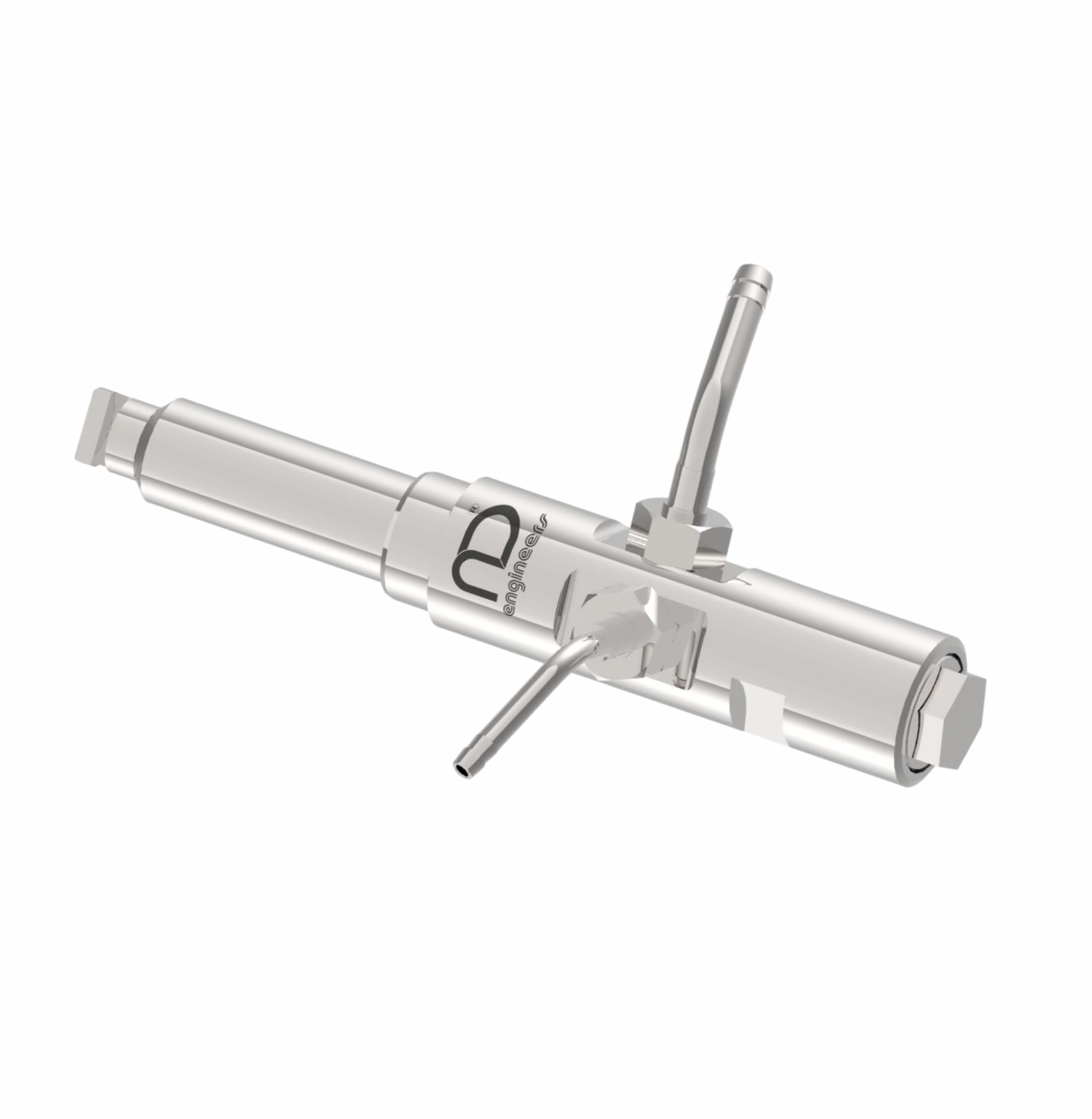
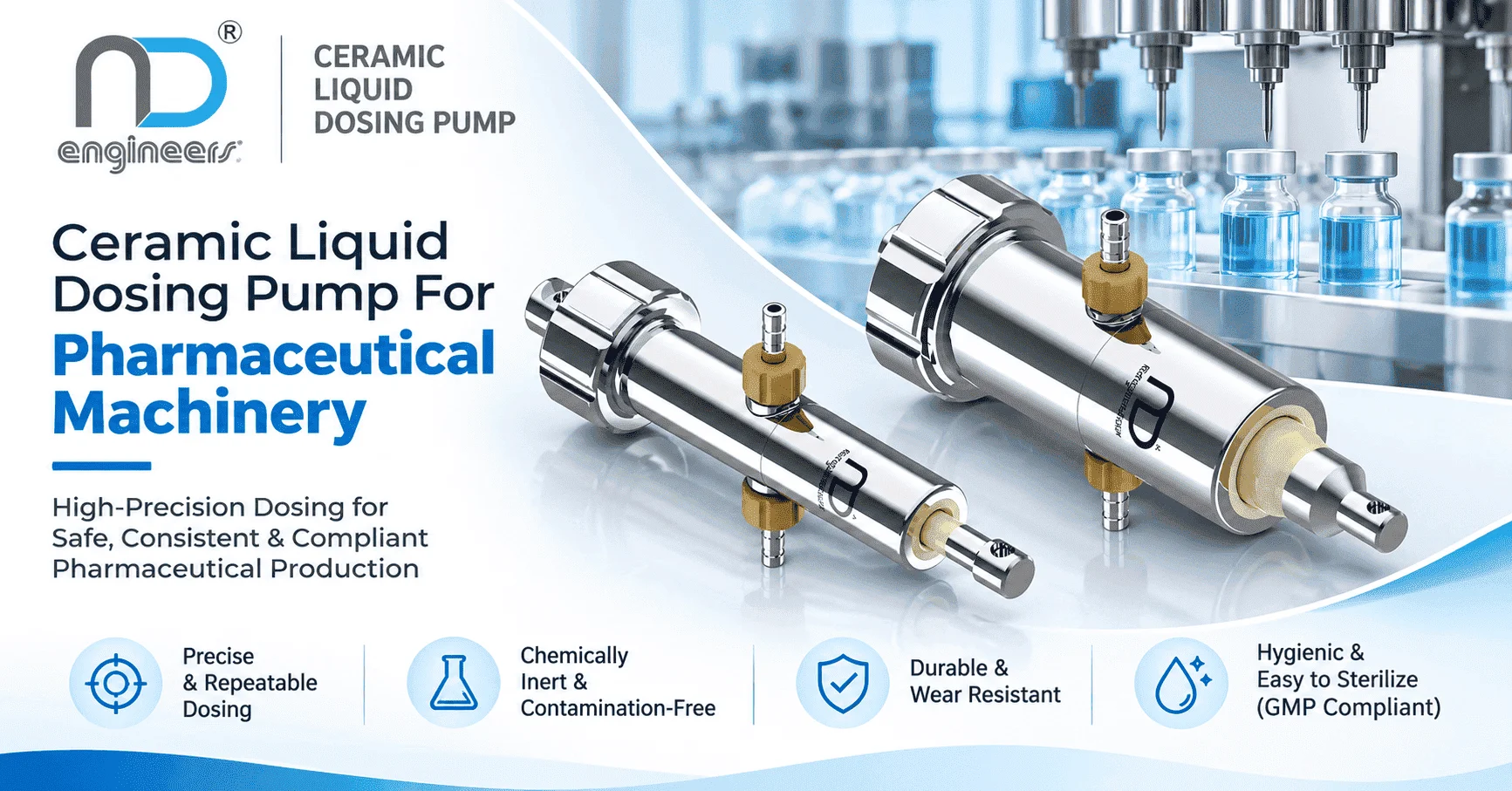
Ceramic Liquid Dosing Pump For Pharmaceutical machinery
In the demanding world of pharmaceutical manufacturing, precision is not just a goal; it is a non-negotiable requirement. The accurate and repeatable dispensing of liquids is paramount for product efficacy, safety, and regulatory compliance. Ceramic liquid dosing pumps have emerged as a superior solution for these critical applications within pharmaceutical machinery, offering a unique blend of inertness, durability, and high-precision performance.
ND ENGINEERS specializes in the design and manufacture of these advanced pumps, engineered to meet the stringent demands of the pharmaceutical industry. Their ceramic liquid dosing pumps are crafted for applications where dispensing small volumes of liquids with exceptional accuracy is essential. By leveraging the inherent properties of ceramic materials, these pumps provide a reliable and consistent method for handling a wide array of fluids, including aggressive or sensitive formulations, ensuring process integrity and product quality.
Understanding Ceramic Liquid Dosing Pumps in Pharmaceuticals
A liquid dosing pump, often referred to as a metering pump, is a specialized type of positive displacement pump designed to inject a precise and controlled volume of liquid into a process. Unlike general-purpose pumps, dosing pumps prioritize accuracy, repeatability, and consistency over high flow rates. They operate by meticulously drawing a specific amount of fluid into a chamber and then discharging it with minimal variation, cycle after cycle.
The choice of ceramic materials for the critical components of these pumps, such as the plunger and cylinder, offers significant advantages in pharmaceutical settings:
- Chemical Inertness: Ceramics are highly resistant to corrosion and chemical attack, making them ideal for dosing a wide range of pharmaceutical ingredients, including aggressive or sensitive substances, without contamination or degradation of the fluid.
- Wear Resistance: The inherent hardness of ceramic materials provides exceptional resistance to wear and abrasion, leading to a longer operational life and consistent performance even when handling abrasive fluids or operating in demanding conditions.
- Thermal Stability: Ceramic components can withstand a broad range of temperatures, crucial for processes involving sterilization or temperature-sensitive liquids.
- Hygiene and Cleanability: The smooth, non-porous surface of ceramic parts facilitates thorough cleaning and sterilization, essential for meeting Good Manufacturing Practices (GMP) and aseptic processing requirements.
These properties collectively make ceramic liquid dosing pumps an indispensable component in modern pharmaceutical machinery, enabling precise volumetric dosing for critical manufacturing steps.
Key Applications in Pharmaceutical Machinery
The high precision and material advantages of ceramic dosing pumps make them suitable for a variety of critical applications within pharmaceutical manufacturing. Their ability to deliver small, consistent volumes is essential for processes where accuracy directly impacts product quality, patient safety, and cost-effectiveness.
Precise API and Excipient Dispensing
Accurately dispensing Active Pharmaceutical Ingredients (APIs) and excipients is vital for ensuring the correct dosage and efficacy of medications. Ceramic pumps ensure micro-dosing with high repeatability.
Sterile and Aseptic Filling
For injectable drugs and sterile products, maintaining an aseptic environment is crucial. Ceramic pumps are designed for sterile and aseptic filling processes, minimizing the risk of contamination.
Formulation and Compounding
In the development and small-batch production of complex pharmaceutical formulations, precise addition of various liquid components is necessary for consistent results.
Laboratory and R&D Use
Research and development settings often require precise liquid handling for experimental processes, sample preparation, and analytical procedures where accuracy is key.
Tangible Benefits of High-Precision Ceramic Dosing
Implementing high-precision ceramic liquid dosing pumps into pharmaceutical machinery offers significant advantages that contribute to operational efficiency, product quality, and regulatory adherence.
- Enhanced Product Consistency: The exceptional repeatability of ceramic pumps ensures that each dose is delivered with minimal variation, leading to more consistent final products.
- Reduced Material Waste: Precise dispensing minimizes the overage or under-dosing of expensive APIs and other critical liquids, reducing waste and improving cost-efficiency.
- Improved Process Control: These pumps allow for fine-tuning of liquid volumes, enabling manufacturers to optimize their processes and achieve desired outcomes consistently.
- Long-Term Reliability: The durable and wear-resistant nature of ceramic components ensures a longer service life and stable performance over time, reducing downtime and maintenance needs.
- Broad Fluid Compatibility: The inert nature of ceramic materials allows for the safe and accurate handling of a wide range of challenging fluids, including corrosive or sensitive liquids, without compromising pump integrity or fluid purity.
- Compliance Readiness: By ensuring high accuracy and repeatability, these pumps support adherence to stringent quality standards and regulatory requirements in pharmaceutical manufacturing.
Selecting the Right Ceramic Liquid Dosing Pump
Choosing the appropriate ceramic liquid dosing pump is crucial for ensuring optimal performance and integration within your pharmaceutical machinery. Several factors need careful consideration to match the pump's capabilities with your specific application needs.
Buyer Checkpoints: What to Look For
When evaluating ceramic dosing pumps, focus on aspects that directly impact accuracy, compatibility, and operational longevity:
- Accuracy and Repeatability Metrics: Investigate the pump's specified accuracy and repeatability, often expressed as a coefficient of variation (COV). Higher precision pumps offer lower COV, critical for sensitive applications.
- Material Compatibility: Confirm that the ceramic materials used are compatible with the specific liquids you intend to dose, considering factors like pH, viscosity, and potential for chemical reactions.
- Dosing Volume Range: Ensure the pump's volumetric range aligns with your required dispensing volumes, whether for micro-dosing or larger precise fills.
- Integration Capabilities: Verify that the pump can be seamlessly integrated with your existing pharmaceutical machinery, considering physical dimensions, control interfaces, and compatibility with common filling machine brands.
- Cleanability and Sterilization: Assess the ease of cleaning and the pump's ability to withstand necessary sterilization processes without compromising performance or material integrity.
Questions to Ask Before Purchasing
To ensure you select the most suitable ceramic liquid dosing pump, consider asking suppliers the following questions:
What is the guaranteed accuracy and repeatability (e.g., COV) for the intended dosing range?
Understanding the precise performance metrics is essential for critical pharmaceutical applications where even small deviations can have significant consequences.
How does the pump's design facilitate easy cleaning and sterilization for aseptic processing?
Confirm that the pump design supports the rigorous hygiene standards required in pharmaceutical manufacturing.
What is the expected lifespan of the ceramic components under typical operating conditions?
While specific warranties are not detailed, understanding the durability and expected service life of ceramic parts helps in long-term planning and cost assessment.
Is the pump design compatible with integration into automated filling lines and specific machinery brands?
Ensuring seamless integration with existing equipment like Bausch Advance Technology, B+S (Bausch + Strobel), Dara, or Tofflon can save significant time and resources.
Can you provide guidance on material compatibility for specific types of pharmaceutical liquids?
While general inertness is a benefit, specific fluid interactions should be clarified to ensure optimal performance and prevent unforeseen issues.
ND ENGINEERS: Precision Ceramic Dosing for Pharma
ND ENGINEERS is dedicated to providing high-precision liquid dosing solutions specifically engineered for the rigorous demands of the pharmaceutical industry. Their expertise lies in the design and manufacture of ceramic liquid dosing pumps, which are crucial for applications requiring exceptional accuracy and repeatability in dispensing small liquid volumes.
The company's ceramic dosing pumps are built with inert ceramic materials, offering superior chemical resistance and durability. This makes them ideal for handling sensitive or aggressive fluids while maintaining process integrity. These pumps are designed for seamless integration into various pharmaceutical machinery and automated systems, including compatibility with prominent filling machine brands such as Bausch Advance Technology, B+S (Bausch + Strobel), Dara, and Tofflon.
ND ENGINEERS focuses on delivering pumps suitable for critical processes like sterile and aseptic filling, as well as micro-dosing applications. Their rotary ceramic dosing pumps are engineered for aseptic filling with remarkable accuracy, ensuring that critical pharmaceutical products are manufactured with the highest standards of quality and consistency.
Elevate Your Pharmaceutical Dosing Accuracy
Ready to enhance the precision and reliability of your liquid dispensing processes? Explore the advanced ceramic liquid dosing pump solutions from ND ENGINEERS. Designed for pharmaceutical machinery, these pumps offer unparalleled accuracy, chemical inertness, and repeatable performance.
Discover ND ENGINEERS' Dosing PumpsFrequently Asked Questions
What makes ceramic materials ideal for pharmaceutical dosing pumps?
Ceramic materials offer excellent chemical inertness, high hardness for wear resistance, thermal stability, and a non-porous surface ideal for hygiene and cleanability in pharmaceutical applications.
Can ceramic dosing pumps handle aggressive chemicals?
Yes, the high chemical resistance of ceramic materials makes them well-suited for dosing a variety of aggressive or sensitive liquids often encountered in pharmaceutical formulations without degradation.
What is the significance of repeatability in pharmaceutical dosing?
Repeatability ensures that each dispensed volume is consistent, which is critical for product efficacy, patient safety, accurate labeling, and meeting stringent regulatory requirements for pharmaceutical products.
Are these pumps suitable for sterile filling applications?
Yes, ceramic dosing pumps are designed with hygiene and precise dispensing in mind, making them highly suitable for sterile and aseptic filling of injectable drugs and other sensitive pharmaceutical products.
Conclusion: Precision is Paramount
The role of a high-precision ceramic liquid dosing pump in pharmaceutical machinery cannot be overstated. These advanced components are essential for achieving the accuracy, repeatability, and chemical compatibility required for the safe and effective manufacturing of medicines. By selecting a ceramic dosing pump, pharmaceutical manufacturers can ensure product consistency, reduce waste, and uphold the rigorous standards demanded by the industry.
ND ENGINEERS stands at the forefront of providing these critical solutions, offering ceramic dosing pumps engineered for peak performance in pharmaceutical applications. Their commitment to precision design and material excellence ensures that your liquid dispensing processes are handled with the utmost reliability and accuracy.