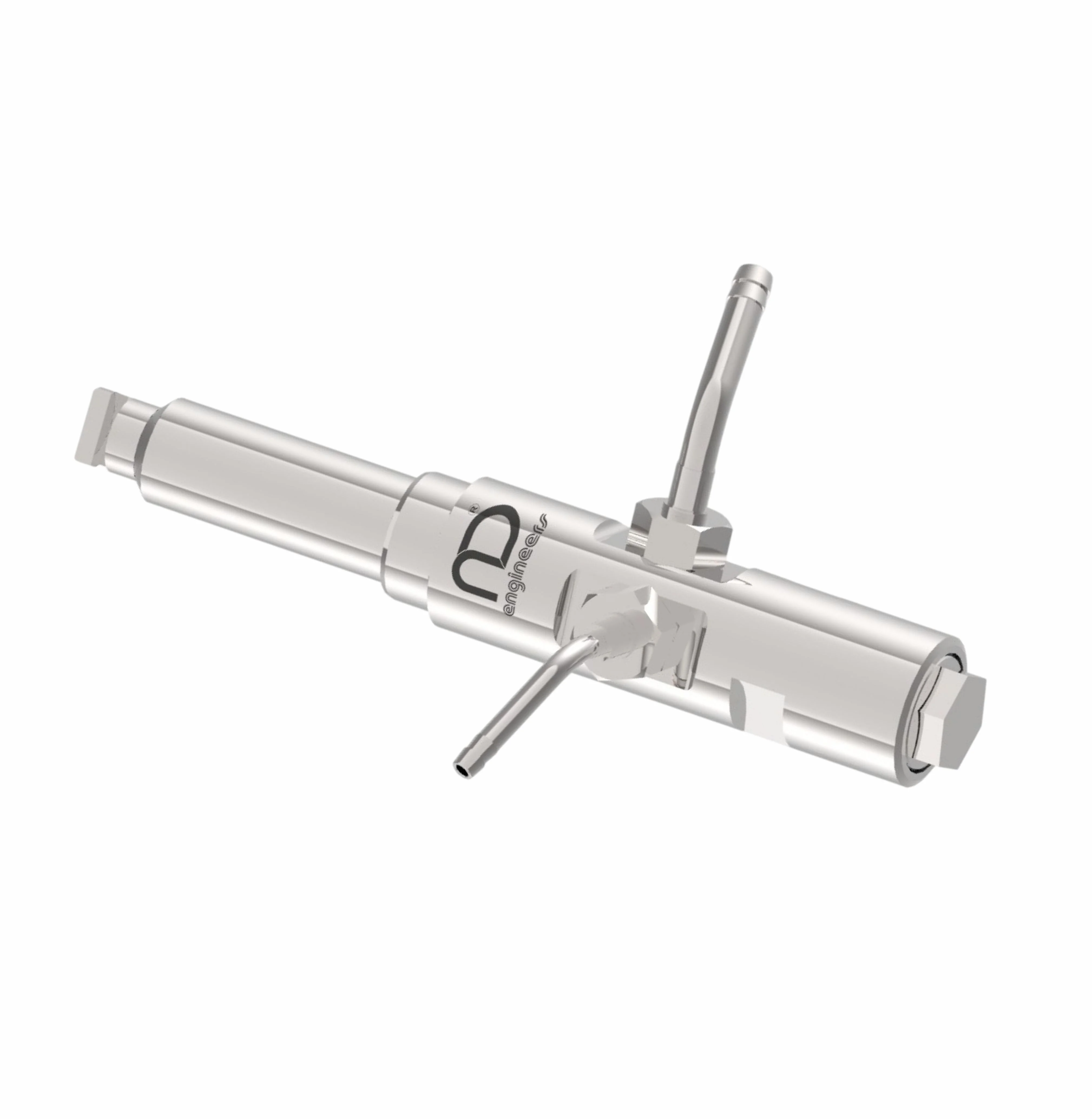
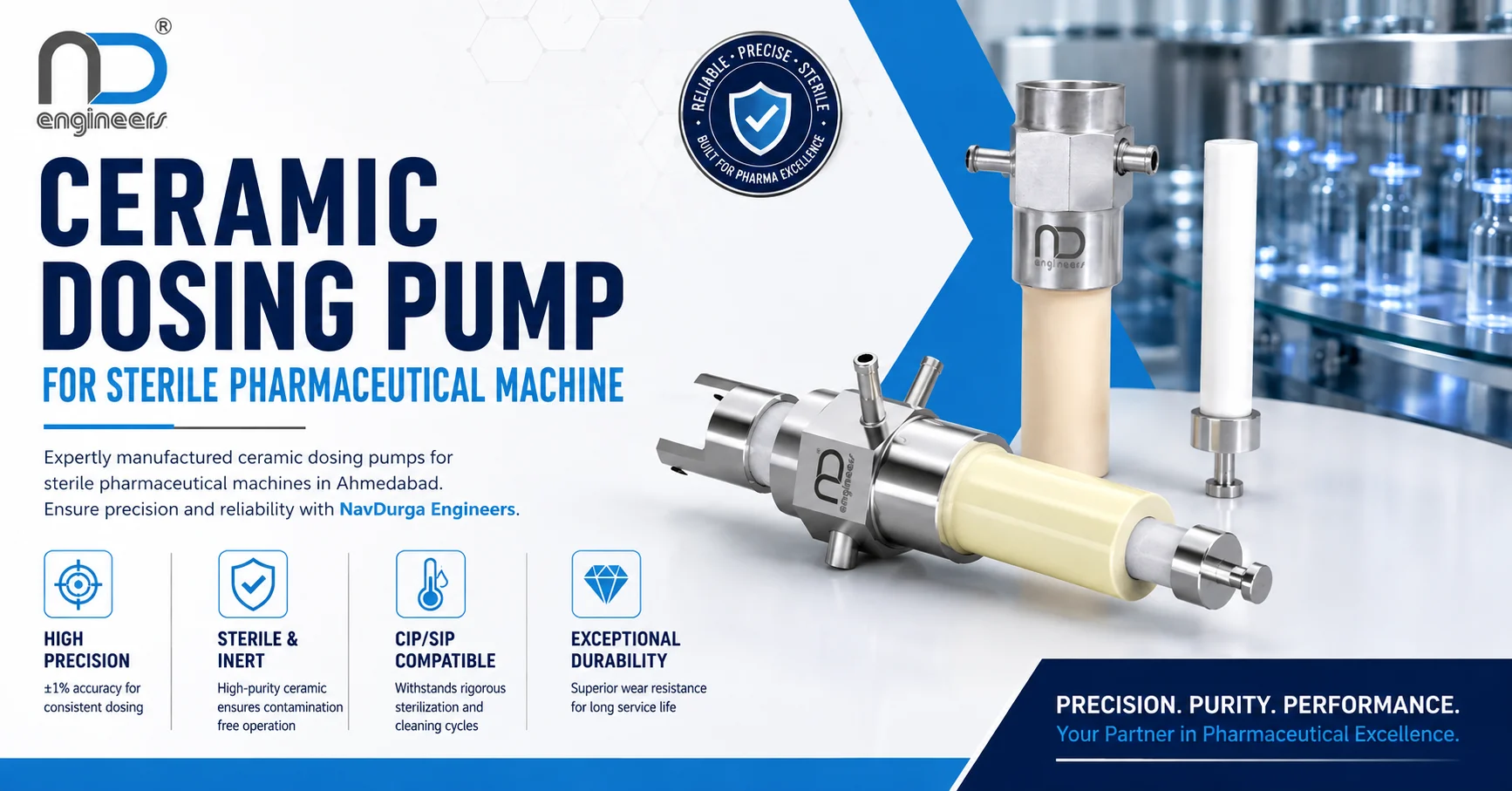
Ceramic Dosing Pump For Sterile pharmaceutical machine
Expertly manufactured ceramic dosing pumps for sterile pharmaceutical machines in Ahmedabad. Ensure precision and reliability with NavDurga Engineers.
What is a Ceramic Dosing Pump? — Overview
A ceramic dosing pump is a precision fluid handling device designed for accurate and repeatable dispensing of liquids. It utilizes components made from advanced technical ceramics, such as alumina or zirconia, which are known for their exceptional hardness, chemical inertness, and wear resistance. These pumps operate by precisely controlling the volume of fluid transferred with each cycle, often through a reciprocating piston or diaphragm mechanism. Their design minimizes contamination and ensures high purity for sensitive fluids.
Key Features and Technical Specifications
- Material Inertness: Constructed from high-purity technical ceramics, offering excellent resistance to corrosive chemicals and preventing product contamination.
- Exceptional Hardness: Ceramic components provide superior wear resistance, leading to extended service life and consistent performance.
- High Precision: Capable of dispensing volumes with accuracies typically within ±1% of the set volume.
- Sterilizability: Designed to withstand sterilization processes like autoclaving and CIP/SIP (Clean-In-Place/Sterilize-In-Place).
- Low Friction: Ceramic-on-ceramic sealing surfaces offer smooth operation and reduced wear.
- Wide Viscosity Range: Suitable for dispensing a broad spectrum of liquid viscosities, from thin solutions to more viscous formulations.
- Hermetic Sealing: Achieves leak-free operation, crucial for sterile environments and hazardous materials.
Industrial Applications and Use Cases
- Sterile Filling: Accurately dispensing sterile liquids, suspensions, and semi-solids into vials, syringes, and bottles in pharmaceutical manufacturing.
- API Handling: Precise metering of Active Pharmaceutical Ingredients (APIs) in intermediate processing steps.
- Biotechnology: Dosing sensitive biological fluids, cell cultures, and reagents in research and production.
- Chemical Metering: Accurate dispensing of high-purity chemicals, solvents, and catalysts in specialized chemical processes.
- Cosmetic Formulation: Precise addition of ingredients in high-end cosmetic and personal care product manufacturing.
- Food & Beverage: Dosing flavorings, colorants, and additives in sterile food and beverage production lines.
How to Choose the Right Ceramic Dosing Pump
Selecting the appropriate ceramic dosing pump is critical for ensuring operational efficiency and product quality. Consider these factors:
- Required Dispensing Volume & Accuracy: Determine the exact volume range and the acceptable tolerance for your application.
- Fluid Properties: Assess the viscosity, corrosiveness, and particulate content of the fluid to be pumped.
- Sterilization Requirements: Confirm the pump's compatibility with your specific sterilization methods (autoclave, SIP, etc.).
- Material Compatibility: Ensure all wetted parts are compatible with the fluid and process conditions.
- Flow Rate: Match the pump's maximum flow rate to your production line's needs.
- Certifications & Compliance: Verify that the pump meets relevant industry standards (e.g., GMP, FDA).
- Supplier Expertise & Support: Choose a manufacturer with proven experience in pharmaceutical applications and reliable after-sales service.
- Customization Needs: Determine if any specific modifications are required for your unique setup.
Quality Standards and Compliance
For pharmaceutical applications, adherence to stringent quality standards is non-negotiable. Ceramic dosing pumps must comply with Good Manufacturing Practices (GMP) to ensure product safety and efficacy. Manufacturers should be able to demonstrate robust quality control processes throughout their production. Look for suppliers who can provide documentation regarding material traceability, dimensional accuracy, and performance validation. Compliance with international standards like ISO is also a strong indicator of a manufacturer's commitment to quality.
Why NavDurga Engineers' Experience and Capability Matters
NavDurga Engineers brings over a decade of specialized experience in manufacturing high-precision spares and accessories for pharmaceutical and packaging machinery. Established in 2010 in Ahmedabad, our focus has always been on delivering components that meet the demanding requirements of sterile environments. Our manufacturing process emphasizes meticulous attention to detail, utilizing advanced ceramic materials and precision machining techniques. Our team comprises experienced engineers dedicated to quality control and continuous improvement.
We understand the critical nature of dosing accuracy and sterility in pharmaceutical production. This deep understanding allows us to design and manufacture ceramic dosing pumps that offer exceptional reliability and longevity. Our capability extends to offering customized solutions tailored to specific machine requirements and process parameters, ensuring seamless integration into your existing sterile filling lines.
Installation, Maintenance, and Care Tips
Proper installation and regular maintenance are key to maximizing the lifespan and performance of your ceramic dosing pump.
- Installation: Ensure the pump is installed on a stable, vibration-free surface. Connect inlet and outlet lines carefully, avoiding any stress on the pump body. Verify correct rotation direction if applicable.
- Initial Run-in: For new pumps, a gentle run-in period with a compatible fluid is recommended to ensure seals seat properly.
- Cleaning: Follow the manufacturer's recommended cleaning procedures, especially for sterile applications. Use approved cleaning agents and ensure thorough rinsing.
- Sterilization: If the pump is designed for SIP, ensure the sterilization medium and cycle parameters are compatible with the ceramic materials.
- Performance Monitoring: Regularly check dispensing accuracy and flow rates. Any deviation may indicate wear or a need for adjustment.
- Seal Inspection: Periodically inspect seals and valve components for signs of wear or damage. Replace them as per the recommended service intervals.
- Lubrication: Ceramic components are self-lubricating; avoid introducing external lubricants unless specifically recommended and approved for sterile use.
Frequently Asked Questions
Ceramic materials are inherently inert, meaning they do not react with most chemicals or fluids, preventing contamination. Their hardness also makes them highly resistant to wear, ensuring long-term precision and durability, which is crucial for sterile applications where component integrity is paramount.
The exceptional hardness and wear resistance of technical ceramics ensure that the critical sealing surfaces and piston/cylinder tolerances remain consistent over extended periods. This minimizes volumetric drift, maintaining high accuracy even after thousands of operational cycles.
While ceramics are very hard, highly abrasive fluids or those with significant particulate content can still cause wear over time. For such applications, specific ceramic grades or pump designs with enhanced wear resistance might be necessary, and consultation with the manufacturer is advised.
The lifespan can vary significantly based on the specific application, fluid properties, operating conditions, and maintenance practices. However, ceramic components are known for their longevity, often lasting several years in demanding pharmaceutical applications before requiring refurbishment or replacement.
Ceramic dosing pumps are generally designed to withstand rigorous CIP and SIP processes. Their chemical inertness and thermal stability allow them to endure the high temperatures, pressures, and aggressive cleaning/sterilizing agents used in these cycles without degradation.
Routine maintenance usually involves visual inspection for leaks, checking dispensing accuracy, and following recommended cleaning and sterilization protocols. Periodic replacement of seals or valve seats may be necessary based on usage and performance monitoring.
Conclusion
For pharmaceutical manufacturers in Ahmedabad seeking to ensure the highest standards of precision, sterility, and reliability in their sterile filling operations, ceramic dosing pumps are an essential component. Their inherent material properties, combined with expert manufacturing, deliver consistent performance and minimize contamination risks. Partnering with an experienced manufacturer like NavDurga Engineers ensures you receive not only a high-quality product but also the technical support needed to integrate and maintain this critical equipment effectively.
Get In Touch
Nd Engineers