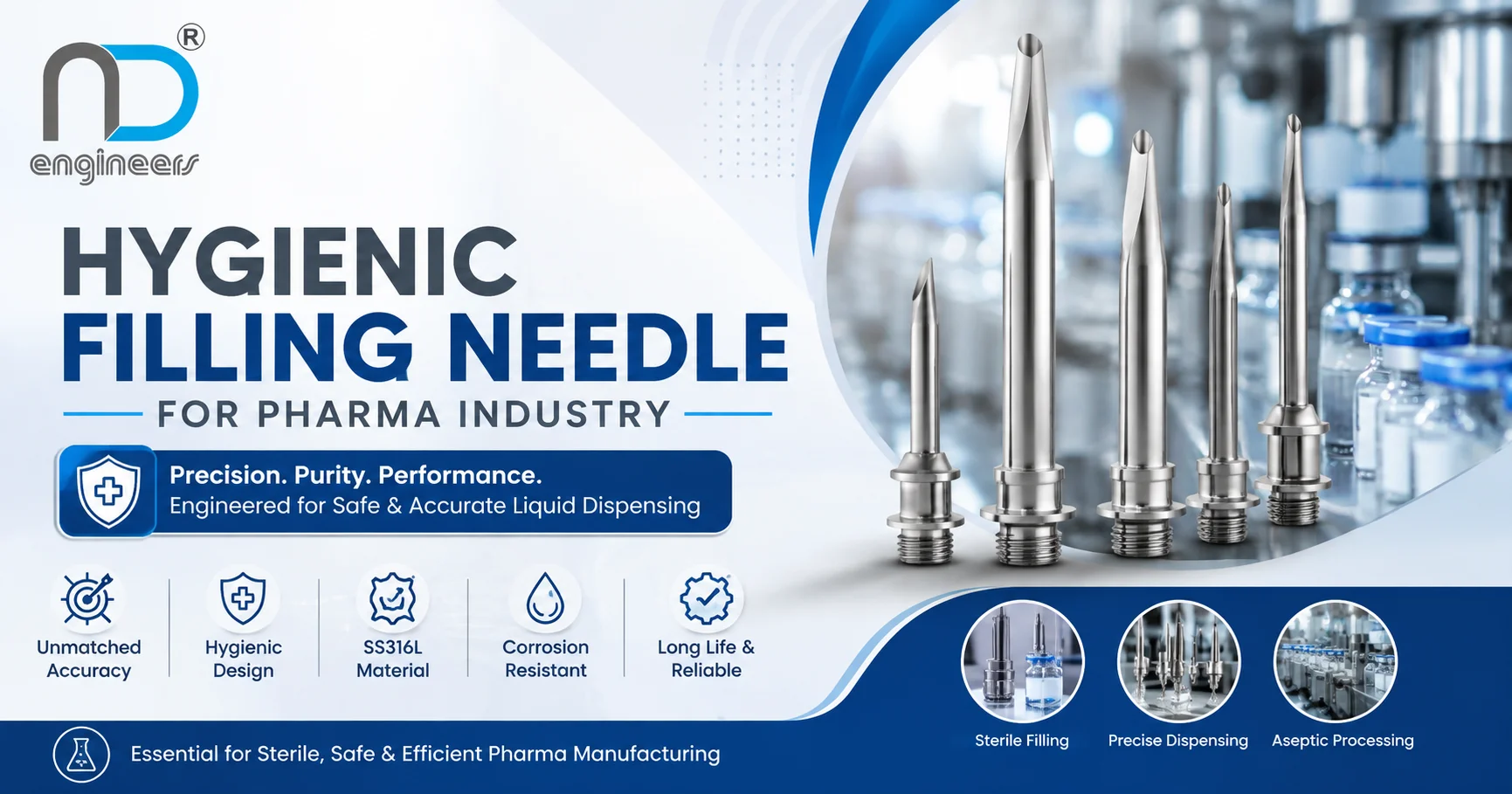
hygienic filling needle for pharma industry
The pharmaceutical industry operates under the most stringent quality and safety standards, where precision, sterility, and reliability are paramount. At the heart of efficient and safe liquid dispensing processes lies a seemingly small but critically important component: the hygienic filling needle. These specialized nozzles are engineered to deliver pharmaceutical products with unparalleled accuracy, minimizing waste and preventing contamination. For manufacturers seeking robust and dependable solutions, understanding the intricacies of hygienic filling needles is essential for maintaining product integrity and meeting regulatory demands.
Understanding Hygienic Filling Needles in Pharma
A hygienic filling needle is a precision-engineered component used in automated filling machines to dispense liquids, semi-liquids, and suspensions into vials, bottles, and other containers. In the pharmaceutical sector, the term "hygienic" refers to a design and construction that prevents microbial contamination and ensures compatibility with sterilization processes. These needles are not mere tubes; they are sophisticated instruments designed for precise volumetric delivery, crucial for everything from life-saving medications to delicate biologics.
The primary function of a hygienic filling needle is to ensure that the exact amount of product is transferred into each container. This accuracy is vital for dosage control, regulatory compliance, and cost-effectiveness. Beyond volume accuracy, hygienic design is indispensable for maintaining the sterility and purity of pharmaceutical products, safeguarding patient safety. The materials used, the surface finish, and the tip configuration all play significant roles in achieving these critical objectives.
Applications and Use Cases in the Pharmaceutical Landscape ⚕️
The versatility and precision of hygienic filling needles make them indispensable across a wide spectrum of pharmaceutical manufacturing processes. Their design considerations cater to the unique challenges posed by different product types and container formats:
- Sterile Liquid Dispensing: Essential for filling sterile solutions, injectables, and ophthalmic preparations where maintaining a contamination-free environment is non-negotiable.
- Vaccine and Biologics Filling: Critical for accurately dispensing sensitive biological products, where precise dosage and prevention of degradation are vital.
- Oral Dosage Forms: Used for filling syrups, suspensions, and liquid medications into bottles, ensuring consistent dosing for patient compliance.
- Aseptic Processing: Integral to aseptic filling lines, where the entire process, including the filling needle, is sterilized to prevent microbial contamination.
- Small Volume Filling: Ideal for high-precision filling of micro-vials and small-volume parenteral (SVP) products, where accuracy is at a premium.
- Viscous Product Filling: Specialized needle designs can accommodate semi-solids and viscous preparations, ensuring smooth and consistent flow.
Key Benefits of Precision-Engineered Hygienic Filling Needles
Investing in high-quality hygienic filling needles offers substantial advantages for pharmaceutical manufacturers, impacting efficiency, product quality, and regulatory adherence:
- Enhanced Product Integrity: The use of biocompatible and corrosion-resistant materials like SS316L stainless steel prevents leaching and contamination, preserving the purity of the pharmaceutical product.
- Unmatched Dispensing Accuracy: Precision engineering ensures exact volumetric delivery, minimizing product waste, ensuring correct dosages, and maintaining batch consistency.
- Reduced Contamination Risk: Smooth surface finishes, electropolished options, and specialized tip designs help prevent biofilm formation and facilitate thorough cleaning, crucial for sterile environments.
- Process Efficiency and Throughput: Reliable performance and optimized flow characteristics contribute to faster filling cycles and higher overall production efficiency.
- Regulatory Compliance: Adherence to stringent industry standards, facilitated by the choice of appropriate materials and hygienic design, supports GMP compliance.
- Durability and Longevity: Robust construction from high-grade stainless steel ensures a long service life, even in demanding production environments subjected to frequent cleaning and sterilization.
Buyer's Guide: Selecting the Right Hygienic Filling Needle 🧭
Choosing the correct hygienic filling needle is a critical decision that directly impacts the success of your filling operations. Several factors must be carefully considered to ensure optimal performance and compatibility with your specific application:
Essential Selection Criteria:
- Material Construction: For pharmaceutical applications, SS316L stainless steel is the preferred choice due to its excellent corrosion resistance, biocompatibility, and suitability for sterilization processes. SS304 may be suitable for less demanding applications but SS316L offers superior performance.
- Tip Design: The tip configuration is crucial for proper product delivery and container interaction. Common designs include:
- Blunt Tip: Ideal for general-purpose filling, often used for viscous liquids or when filling from the bottom up to minimize foaming.
- Beveled Tip: Offers a sharper angle for precise insertion and can be useful for specific container neck geometries.
- Side-Port Tip: Designed to dispense product from the side, often used to prevent splashing or aeration in sensitive products.
- Bottom-Fill Tip: The needle enters the container and fills from the bottom upwards, ideal for foamy products or to maintain sterility from the container opening.
- Internal Diameter (ID) and Length: These dimensions must be matched to the viscosity of the product and the size of the container. A thicker viscosity may require a larger ID for adequate flow, while the length must ensure the product is delivered to the appropriate level within the container.
- Surface Finish: An ultra-smooth surface finish, particularly electropolished options, is essential for hygienic applications. This minimizes the potential for product adhesion, microbial growth, and facilitates effective cleaning and sterilization.
- Sterilization Compatibility: Ensure the needle material and construction can withstand common sterilization methods used in your facility, such as autoclaving (steam sterilization).
Buyer Insight: When evaluating filling needles, don't overlook the importance of the needle's internal smoothness. A rough internal surface can trap product residues, leading to cross-contamination and cleaning challenges, even with SS316L. Consider electropolished options for the highest level of hygiene and ease of cleaning.
| Feature | Standard (SS304) | Premium (SS316L) | High-Hygiene (SS316L Electropolished) |
|---|---|---|---|
| Corrosion Resistance | Good | Excellent | Superior |
| Biocompatibility | Good | Excellent | Superior |
| Surface Finish (Internal/External) | Standard Polish | Ultra-Smooth | Mirror-Like (Electropolished) |
| Foaming Prevention (with Bottom-Fill) | Good | Very Good | Excellent |
| Cleaning & Sterilization Suitability | Good | Excellent | Superior |
Questions to Ask Before Purchasing:
- What is the exact viscosity range of the product I will be filling?
- What is the internal diameter and length required for my specific container and product?
- What type of tip design is best suited to minimize foaming or splashing for my product?
- What sterilization methods are employed in my facility, and is the needle material compatible?
- What surface finish (standard polish, ultra-smooth, or electropolished) is required for my product's sensitivity and my cleaning protocols?
- Are custom modifications to the internal diameter or length necessary?
ND ENGINEERS: Your Partner in Precision Pharmaceutical Filling 🇮🇳
NavDurga Engineers (ND ENGINEERS), established in 2010 in Ahmedabad, Gujarat, India, specializes in manufacturing high-quality pharmaceutical and packaging machinery spares and accessories. They are dedicated to providing precision-engineered solutions, including a comprehensive range of hygienic filling needles specifically designed for the demanding pharmaceutical industry.
ND ENGINEERS utilizes SS316L stainless steel for their pharmaceutical filling needles, a material chosen for its exceptional corrosion resistance, biocompatibility, and suitability for rigorous sterilization processes. Each needle is crafted with an emphasis on precision engineering, ensuring reliable performance and consistent dispensing. The company offers a variety of tip designs – including blunt, beveled, side-port, and bottom-fill options – and provides customization for internal diameter and length to meet unique application requirements.
Understanding the critical nature of pharmaceutical manufacturing, ND ENGINEERS focuses on delivering products with ultra-smooth surface finishes and offers electropolished options upon request. This commitment to quality ensures that their filling needles contribute to maintaining product integrity, preventing contamination, and enhancing the overall efficiency of your filling lines. ND ENGINEERS prides itself on its customer-focused approach, providing reliable manufacturing and tailored solutions to support the exacting standards of the pharmaceutical sector.
Frequently Asked Questions About Hygienic Filling Needles
What makes a filling needle "hygienic" for pharmaceutical use?
A hygienic filling needle is designed and manufactured to prevent contamination. This includes using biocompatible materials like SS316L, achieving an ultra-smooth surface finish (often electropolished) to prevent microbial adhesion and facilitate cleaning, and employing designs (like bottom-fill tips) that minimize product aeration and spillage.
Why is SS316L stainless steel the preferred material?
SS316L stainless steel is chosen for its superior corrosion resistance, excellent biocompatibility, and ability to withstand repeated sterilization cycles without degradation. Its low carbon content also minimizes the risk of carbide precipitation during welding, maintaining its corrosion resistance.
Can filling needles be customized?
Yes, hygienic filling needles can and often need to be customized. Key parameters that can be tailored include the internal diameter, overall length, and tip design to precisely match the product's viscosity, the container's dimensions, and the filling process requirements.
What is the difference between a blunt tip and a bottom-fill tip?
A blunt tip is a general-purpose tip that can be used for various applications, often for filling from the bottom up. A bottom-fill tip is specifically designed to enter the container and begin dispensing product from the very bottom, moving upwards. This is particularly effective for minimizing foaming and aeration in sensitive or carbonated liquids.
Achieve Precision and Purity in Your Pharma Filling
Ensure the highest standards of sterility, accuracy, and efficiency in your pharmaceutical liquid filling operations. Explore the range of precision-engineered hygienic filling needles crafted by ND ENGINEERS from high-grade SS316L stainless steel.
Contact ND ENGINEERS today to discuss your specific requirements and find the ideal filling needle solution tailored to your pharmaceutical applications.
Visit ND ENGINEERS