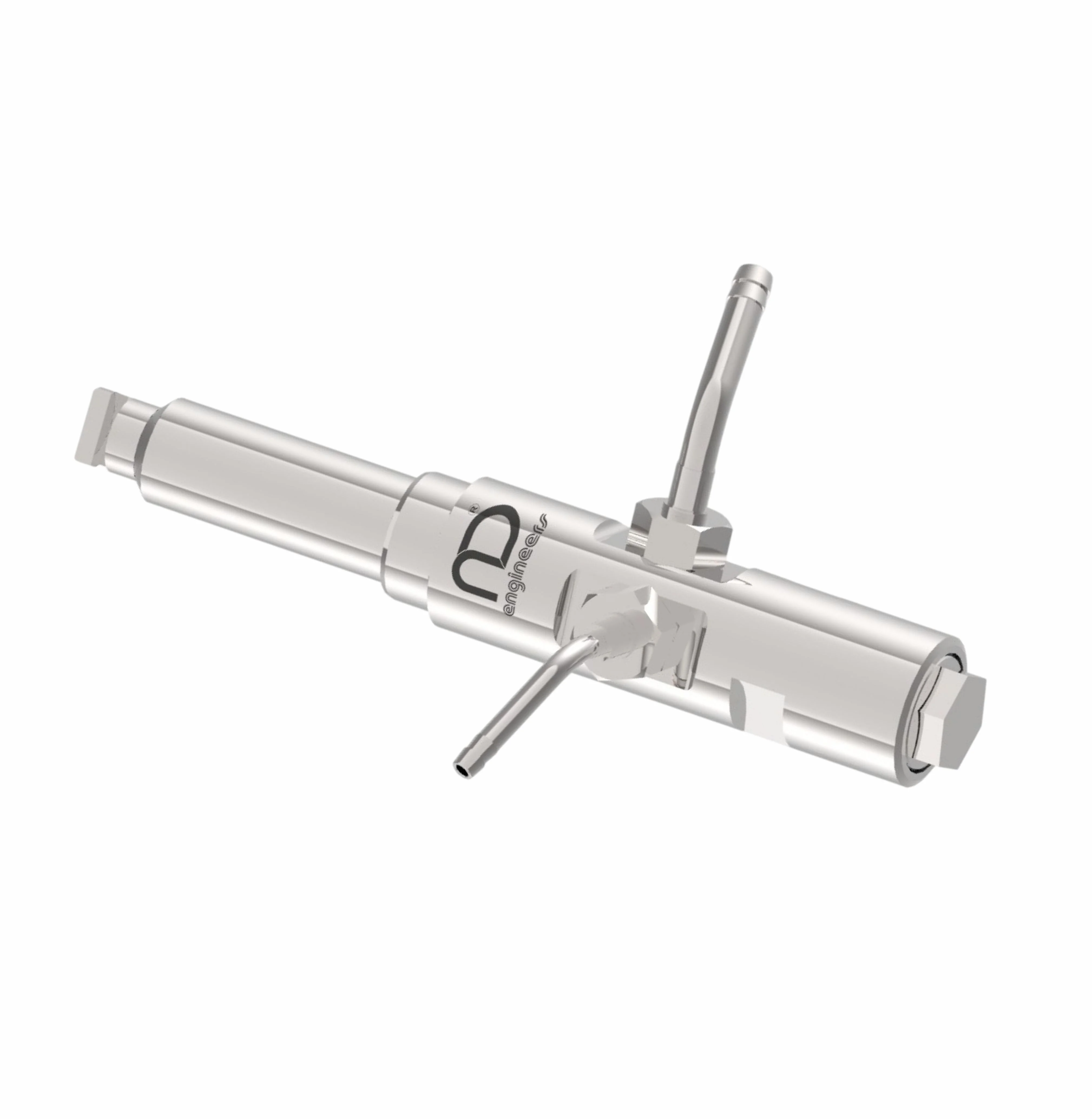
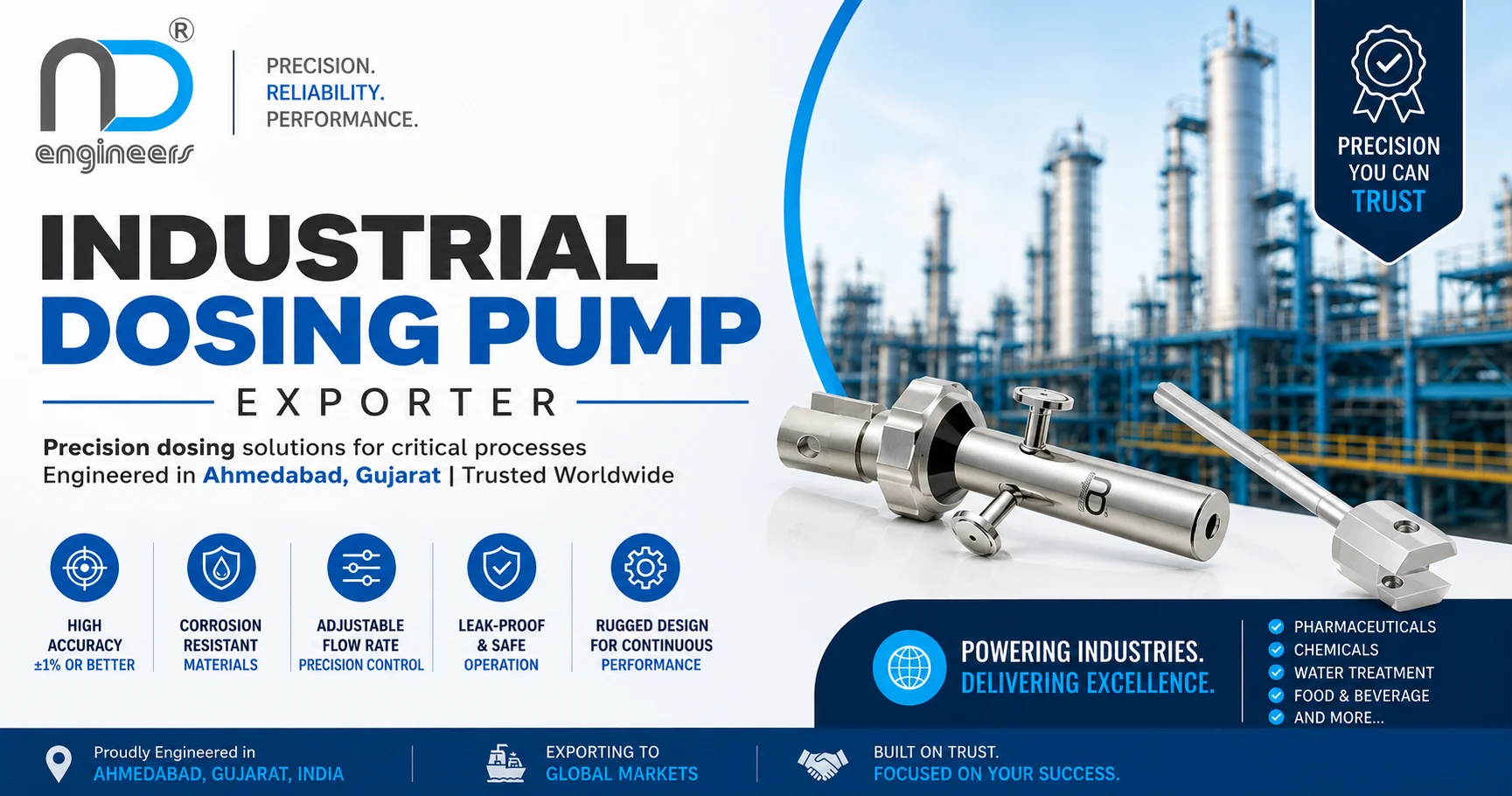
Industrial Dosing Pump Exporter
Navigating industrial fluid transfer? Discover precision dosing pumps from Ahmedabad, Gujarat. Nd Engineers offers reliable solutions for diverse applications.
Why This Matters in Ahmedabad, Gujarat
Gujarat stands as a significant industrial powerhouse in India, particularly known for its robust pharmaceutical, chemical, and manufacturing sectors. These industries demand high-precision equipment to meet stringent quality controls and production targets. The local ecosystem in Ahmedabad, with its skilled workforce and established engineering capabilities, supports the development and export of specialized machinery spares like industrial dosing pumps, crucial for maintaining the efficiency and compliance of regional and international operations.
What Is an Industrial Dosing Pump — Overview
An industrial dosing pump is a positive displacement pump designed to inject a precise volume of fluid into a process stream or batch. Unlike general transfer pumps, dosing pumps are characterized by their ability to deliver highly accurate and repeatable flow rates, often adjustable to suit specific application needs. They typically operate by displacing a fixed volume of liquid with each stroke or rotation, making them indispensable for applications where exact chemical addition or ingredient proportioning is vital.
Key Features and Technical Specifications
Industrial dosing pumps are built with specific features to ensure accuracy, durability, and compatibility with diverse industrial fluids. These technical aspects are crucial for buyers evaluating potential suppliers.
High volumetric accuracy, typically within ±1% or better, ensuring precise fluid delivery.
Construction from corrosion-resistant materials such such as advanced ceramics, SS316L stainless steel, or PTFE for chemical compatibility.
Adjustable flow rates, often controlled electronically or mechanically, to adapt to varying process requirements.
Sealed pump heads and leak-proof designs to prevent contamination and ensure operator safety.
Capability to handle a wide range of fluid viscosities and temperatures.
Robust mechanical components designed for continuous, heavy-duty industrial operation.
Compatibility with Clean-in-Place (CIP) and Sterilize-in-Place (SIP) protocols for hygienic applications.
Modular designs allowing for easy maintenance and component replacement.
Industrial Applications and Use Cases
The versatility of industrial dosing pumps makes them indispensable across a broad spectrum of industries where controlled fluid addition is paramount. Their precision ensures product consistency and process efficiency.
- Pharmaceutical Manufacturing: Accurate dosing of active pharmaceutical ingredients (APIs), excipients, and sterile solutions in vial filling and formulation.
- Chemical Processing: Controlled injection of catalysts, reagents, pH adjusters, and additives in chemical reactors and blending operations.
- Water and Wastewater Treatment: Precise addition of coagulants, flocculants, disinfectants (e.g., chlorine), and pH control chemicals.
- Food and Beverage Industry: Metering of flavorings, colorants, preservatives, and other additives into food products and beverages.
- Cosmetics and Personal Care: Dispensing fragrances, emollients, and pigments during the formulation and packaging of cosmetic products.
- Oil and Gas: Injection of corrosion inhibitors, demulsifiers, and other chemicals into pipelines and processing units.
- Biotechnology and Research: Accurate dispensing of media, buffers, and reagents in laboratory and pilot-scale bioreactors.
How to Choose the Right Industrial Dosing Pump
Selecting an appropriate industrial dosing pump requires careful consideration of several operational and technical factors. A thorough evaluation ensures the pump meets specific process demands and integrates seamlessly into existing systems.
- Fluid Characteristics: Assess the viscosity, corrosiveness, temperature, and particulate content of the fluid to be dosed.
- Flow Rate and Pressure Requirements: Determine the minimum and maximum flow rates needed, along with the required discharge pressure.
- Accuracy and Repeatability: Verify the pump's precision specifications to match the critical tolerances of your application.
- Material Compatibility: Ensure all wetted parts of the pump are compatible with the process fluid to prevent corrosion or contamination.
- Control and Automation: Consider whether manual, analog, or digital control options are necessary for integration with your plant's automation system.
- Maintenance and Serviceability: Evaluate the ease of routine maintenance, availability of spare parts, and supplier support.
- Certifications and Compliance: Confirm the pump meets relevant industry standards and regulatory requirements, especially for pharmaceutical or food-grade applications.
- Supplier Experience: Choose a supplier with a proven track record in manufacturing and exporting industrial dosing pumps for similar applications.
Quality Standards and Compliance
Adherence to established quality standards and regulatory compliance is non-negotiable for industrial dosing pumps, particularly for those used in sensitive sectors like pharmaceuticals. Buyers should always verify that a supplier's products meet relevant certifications. Standards such as ISO 9001 ensure consistent quality management systems, while GMP (Good Manufacturing Practices) compliance is critical for equipment used in pharmaceutical production to prevent contamination and ensure product safety. Other certifications like IAF and MSME further indicate a manufacturer's commitment to international quality benchmarks and operational excellence. These certifications provide assurance regarding the design, materials, manufacturing processes, and overall reliability of the dosing pumps.
Why Company Experience and Capability Matters
The reliability of an industrial dosing pump directly impacts production quality and operational uptime. Partnering with an experienced manufacturer and exporter like NavDurga Engineers, established in Ahmedabad since 2010, offers distinct advantages. Our team possesses deep technical capability in designing and producing specialized pharmaceutical and packaging machinery spares, including a range of ceramic and metal dosing pumps. We focus on meticulous manufacturing processes, stringent quality control measures, and the use of high-grade materials like advanced ceramics and SS316L. This commitment is supported by certifications such as GMP, ISO, IAF, and MSME, underscoring our dedication to delivering precision-engineered solutions. Our capability extends to offering customization options and ensuring reliable delivery and after-sales support, crucial for clients who depend on consistent performance.
Installation, Maintenance and Care Tips
Proper installation and regular maintenance are vital for maximizing the lifespan and maintaining the accuracy of industrial dosing pumps. Following manufacturer guidelines helps ensure optimal performance and prevents premature wear.
- Correct Installation: Ensure the pump is installed on a stable, level surface, with proper alignment of inlet and outlet piping to prevent strain.
- Initial Calibration: Perform thorough calibration upon installation to verify accurate flow rates and adjust settings according to specific process requirements.
- Regular Inspections: Periodically check for leaks, unusual noises, and wear on seals, diaphragms, and valves. Address any issues promptly to prevent further damage.
- Cleaning Protocols: Adhere strictly to cleaning procedures, especially for CIP/SIP compatible pumps in hygienic environments, to prevent residue buildup and contamination.
- Lubrication: Follow the manufacturer's recommendations for lubricating moving parts to reduce friction and extend component life.
- Genuine Spare Parts: Always use original or manufacturer-approved spare parts for replacements to maintain the pump's performance specifications and warranty.
- Operator Training: Ensure all personnel operating and maintaining the pump are adequately trained on its functions, safety protocols, and troubleshooting.
Frequently Asked Questions
Industrial dosing pumps are designed to handle a wide array of fluids, including corrosive chemicals, viscous liquids, abrasive slurries, and sterile solutions. The specific materials of construction, such as ceramic, stainless steel, or Teflon, determine the pump's compatibility with different fluid properties, ensuring safe and effective dispensing across various industrial applications.
The frequency of dosing pump calibration depends on the application's precision requirements, the fluid's characteristics, and the pump's operational hours. For critical processes, daily or weekly checks might be necessary. For less sensitive applications, monthly or quarterly calibration could suffice. Regular calibration ensures the pump maintains its accuracy and repeatability over time.
Ceramic dosing pumps are highly valued for their exceptional hardness, wear resistance, and chemical inertness, making them ideal for corrosive or abrasive fluids and sterile environments. Metal dosing pumps, typically made from stainless steel, offer robust mechanical strength and are suitable for a broader range of general industrial applications where extreme chemical resistance or ultra-high purity is not the primary concern.
Yes, many industrial dosing pumps, particularly those made with advanced ceramic materials and SS316L, are specifically designed for sterile environments. They often feature CIP (Clean-in-Place) and SIP (Sterilize-in-Place) capabilities, smooth surfaces to prevent bacterial growth, and sealed designs to maintain aseptic conditions, making them suitable for pharmaceutical and biotechnology applications.
Several factors influence a dosing pump's lifespan, including the corrosiveness and abrasiveness of the fluid, operating pressure and temperature, frequency of use, and adherence to maintenance schedules. Using the correct materials of construction, performing regular inspections, and replacing worn components promptly can significantly extend the pump's operational life.
Many industrial dosing pump manufacturers offer customization options to meet unique application requirements. This can include specific flow rate ranges, material choices for wetted parts, specialized control interfaces, or integration features for existing automation systems. Customization ensures the pump precisely fits the operational demands of a particular industrial process.
Conclusion
The demand for precision fluid handling in industrial processes underscores the critical role of reliable industrial dosing pumps. For businesses seeking consistent quality and operational efficiency, selecting a knowledgeable industrial dosing pump exporter is a strategic decision. Manufacturers like NavDurga Engineers in Ahmedabad, Gujarat, combine technical expertise with a commitment to quality, offering robust solutions that meet the stringent requirements of diverse industries. By focusing on material compatibility, accuracy, and comprehensive support, buyers can ensure their fluid dispensing needs are met with dependable and high-performing equipment.
Get In Touch
Nd Engineers