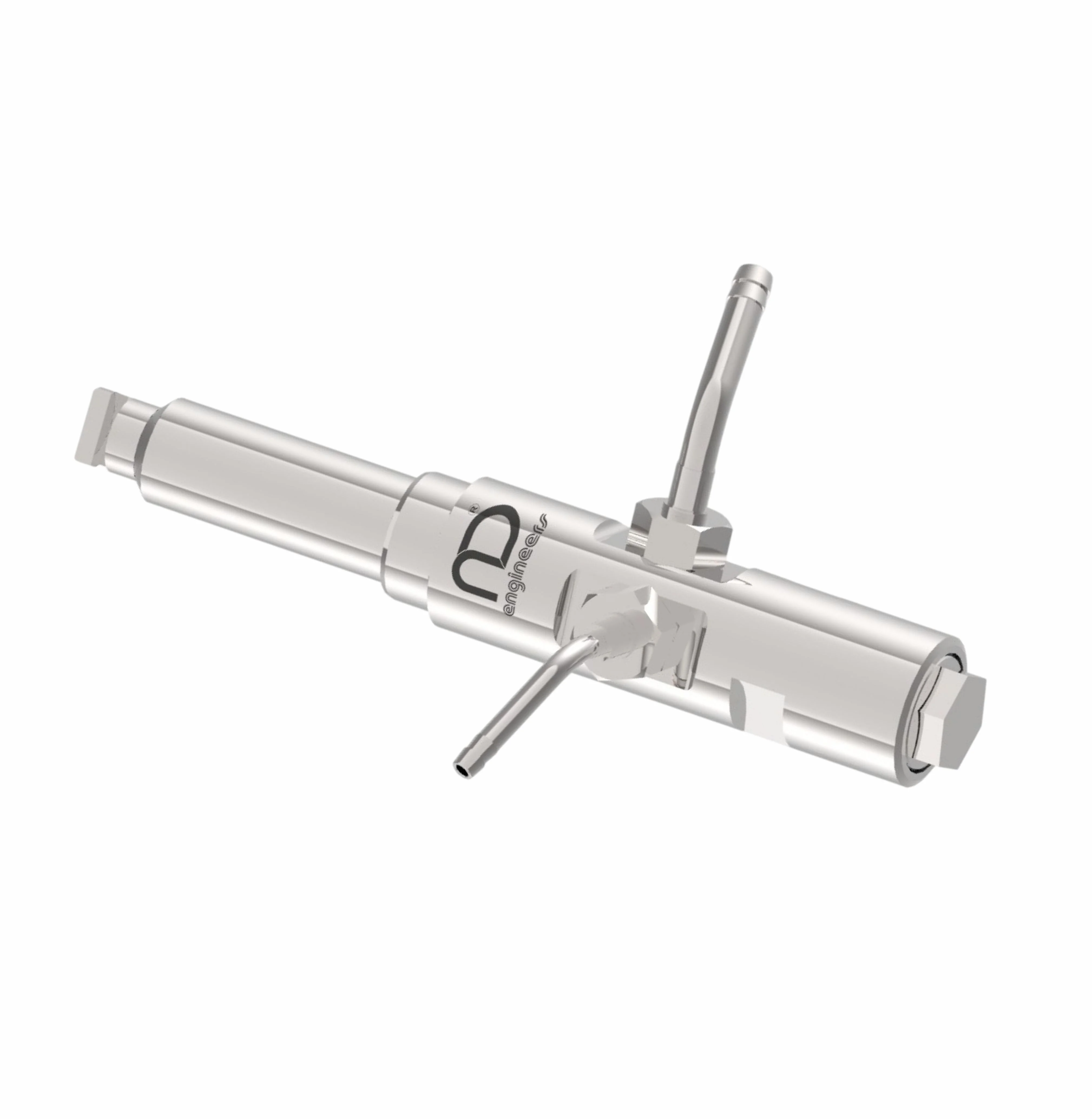
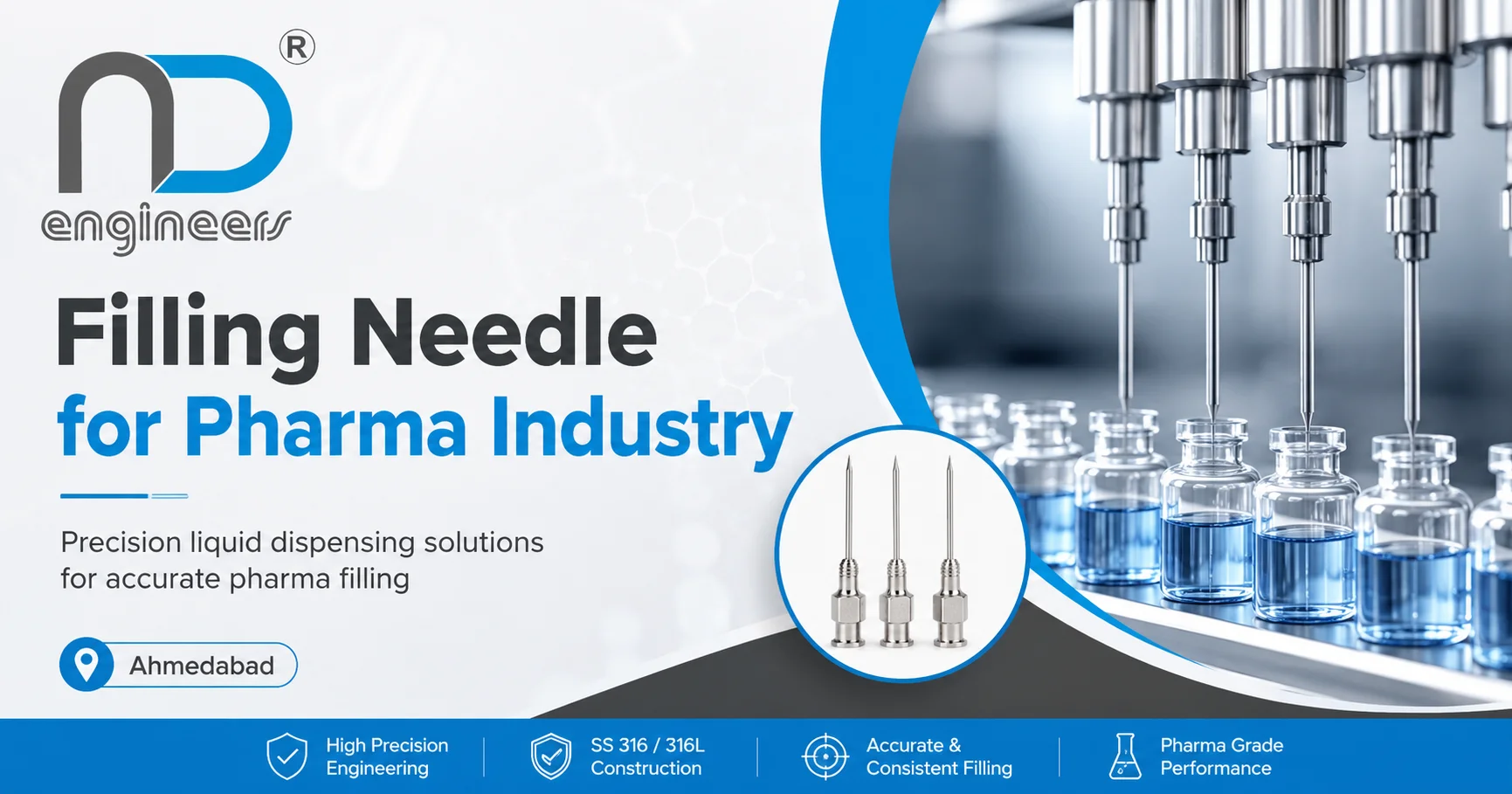
Filling needle for pharma industry
Precision filling needles for the pharmaceutical industry in Ahmedabad. ND Engineers offers high-performance, durable solutions for accurate liquid dispensing.
Key Features and Technical Specifications
- Material: Constructed from pharmaceutical-grade SS316L stainless steel or other inert alloys for maximum chemical resistance and biocompatibility.
- Tip Design: Available in various tip configurations, including blunt, bevelled, or specialized dispensing tips, optimized for different viscosities and filling methods.
- Flow Control: Engineered for controlled liquid flow to prevent splashing, foaming, and overfilling, ensuring accurate volumetric dispensing.
- Drip Prevention: Features like anti-drip valves or specialized tip geometries minimize residual liquid after dispensing, reducing waste and maintaining cleanliness.
- Precision Machining: Manufactured with tight tolerances to ensure consistent performance and accurate dosage delivery, often within ±1% of the desired volume.
- Sterilizability: Designed to withstand common sterilization methods like autoclaving or chemical sterilization without compromising integrity or performance.
- Customization Options: Available in a range of diameters, lengths, and connection types to suit various filling machines and application requirements.
Industrial Applications and Use Cases
- Liquid Dosage Filling: Accurately filling vials and bottles with syrups, suspensions, solutions, and injectables.
- Syringe Filling: Precisely dispensing medications into pre-filled syringes for parenteral administration.
- Ophthalmic and Otic Solutions: Dispensing sensitive eye and ear drops with minimal wastage and precise droplet control.
- Cosmetic and Personal Care Products: Filling creams, lotions, serums, and other viscous products into their final packaging.
- Laboratory Reagent Dispensing: Used in research and quality control labs for precise dispensing of chemical reagents and samples.
- Nutraceutical and Supplement Filling: Accurately filling liquid supplements and vitamins into bottles and capsules.
- Oral Care Product Filling: Dispensing mouthwash, gels, and pastes into tubes and bottles.
How to Choose the Right Filling Needle
Selecting the appropriate filling needle is crucial for optimal performance and product quality. Consider these factors:
- Product Viscosity: Match the needle's internal diameter and tip design to the viscosity of the liquid being dispensed. Thicker liquids require larger diameters and specific tip geometries.
- Required Accuracy: Determine the acceptable tolerance for volumetric dispensing. Higher accuracy demands needles with tighter manufacturing tolerances and specialized designs.
- Filling Machine Compatibility: Ensure the needle's shank diameter and connection type are compatible with your specific filling machine or system.
- Container Type: The needle's length and tip design should be suitable for reaching the bottom of the container without touching it, or for specific filling techniques like bottom-up filling.
- Sterilization Requirements: Verify that the needle material and construction can withstand the sterilization methods used in your facility.
- Material Compatibility: Ensure the needle material is inert and will not react with or contaminate the product being dispensed.
- Drip-Off Performance: For sensitive or valuable products, prioritize needles with effective anti-drip mechanisms.
- Supplier Reputation and Support: Choose a manufacturer with a proven track record in producing high-quality pharmaceutical components and offering reliable technical support.
Quality Standards and Compliance
In the pharmaceutical industry, adherence to stringent quality standards is non-negotiable. Filling needles must meet specific requirements to ensure product safety and regulatory compliance. Manufacturers should ideally adhere to standards such as ISO 9001 for quality management systems. Materials used, particularly stainless steel grades like SS316L, are chosen for their inertness and resistance to corrosion, preventing leaching into the pharmaceutical product. Documentation regarding material traceability, manufacturing processes, and quality control checks is vital. Buyers should always inquire about the certifications and quality assurance protocols followed by their supplier to ensure the needles meet the rigorous demands of pharmaceutical applications.
Why ND Engineers' Experience and Capability Matter
At ND Engineers, our extensive experience in manufacturing pharmaceutical and packaging machinery spares, established in 2010, forms the bedrock of our capability. We understand the critical nature of precision components like filling needles within the pharmaceutical workflow. Our manufacturing process is meticulously controlled, utilizing advanced machinery and skilled technicians to achieve the tight tolerances required for high-accuracy dispensing. We pride ourselves on our technical expertise, allowing us to not only produce standard filling needles but also to offer customized solutions tailored to unique client requirements.
Our commitment to quality control is unwavering, with rigorous checks at every stage of production. This ensures that each needle leaving our facility meets the highest standards of performance, durability, and reliability. We focus on building long-term relationships with our clients by providing dependable products and responsive after-sales support, ensuring your operations in Ahmedabad and beyond run smoothly and efficiently.
Installation, Maintenance, and Care Tips
Proper installation and regular maintenance are key to maximizing the lifespan and performance of your pharmaceutical filling needles.
- Installation: Ensure the needle is securely attached to the filling machine's dispensing head, verifying the connection is leak-proof. For volumetric systems, calibrate the needle and associated pump or syringe according to the manufacturer's guidelines to achieve the desired fill accuracy.
- Cleaning: After each use, thoroughly clean the needles to prevent product residue buildup, which can affect flow and accuracy. Use appropriate cleaning agents and methods recommended for the specific product and needle material.
- Sterilization: If sterilization is required, follow the recommended procedures (e.g., autoclaving, chemical sterilization) for the needle material. Ensure the sterilization process does not degrade the needle's integrity.
- Inspection: Regularly inspect needles for any signs of wear, damage, or blockage. Bent or damaged needles should be replaced immediately to maintain accuracy and prevent potential contamination.
- Storage: Store cleaned and dried needles in a clean, protected environment to prevent contamination and physical damage. Specialized storage racks or cases can be beneficial.
Frequently Asked Questions
A1: The primary function of a filling needle is to accurately and precisely dispense liquid or semi-liquid pharmaceutical products into containers like vials, bottles, or syringes. It ensures controlled volume delivery, minimizes product wastage, and helps maintain product integrity during the filling process.
A2: Pharmaceutical filling needles are typically made from high-grade stainless steel, most commonly SS316L, due to its excellent corrosion resistance, chemical inertness, and biocompatibility. Other specialized alloys may be used for specific applications requiring enhanced properties.
A3: The needle's tip design, internal diameter, and length are critical. A well-designed needle ensures smooth flow, prevents splashing or foaming, minimizes drip-off after dispensing, and contributes to precise volumetric accuracy, all of which are vital for product quality and patient safety.
A4: Yes, customization is often necessary. Filling needles can be manufactured with specific diameters, lengths, tip configurations, and connection types to perfectly match the viscosity of the product, the filling machine's specifications, and the container dimensions.
A5: Signs include visible damage like bending or corrosion, inconsistent dispensing volumes, increased drip-off, or blockages that cannot be cleared. Regular inspection and performance monitoring are key to identifying when replacement is needed.
A6: The supplier's experience is highly important. Experienced manufacturers understand the stringent quality requirements of the pharmaceutical industry, possess the technical expertise for precision manufacturing, and can provide reliable products and necessary certifications, ensuring compliance and operational continuity.
Conclusion
For pharmaceutical manufacturers in Ahmedabad, the selection of high-quality filling needles is a critical decision that directly impacts product accuracy, operational efficiency, and regulatory compliance. Understanding the technical specifications, application requirements, and the importance of robust quality standards is paramount. Partnering with an experienced and capable manufacturer like ND Engineers ensures you receive precision-engineered components designed for reliability and performance, backed by a commitment to quality and customer satisfaction.
Get In Touch
Nd Engineers